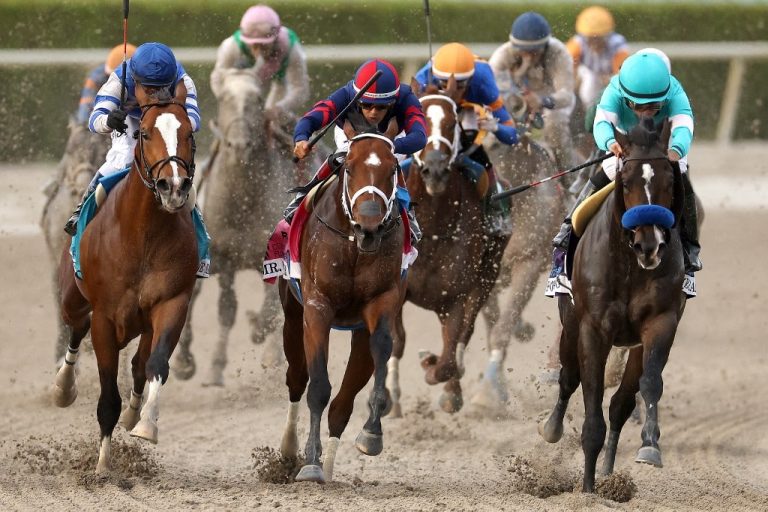
The Preakness, the second race of the fabled Triple Crown, will be held Saturday, May 18, at Pimlico Race Course in Baltimore. The race is contested at 1 3/16-miles, slightly shorter than the 1 ¼-mile Kentucky Derby, and favors speed. Eventual winners are usually positioned at or near the front early on. It’s tough to rally at this track. Justify won this event in a field of eight last year, two weeks after prevailing in a field of 20 at the Derby. He went on to capture the Belmont Stakes three weeks later and complete the Triple Crown sweep.
The field for the Preakness is always smaller than the Derby, because beaten horses with no Triple Crown possibilities will not come back to run two weeks later. Some of the early Preakness confirmations for May 18 include Improbable, who ran out of the money in the Derby but is considered a threat here nonetheless.
A notable absentee is Maximum Security, who will skip the Preakness after suffering the indignity of being the first Derby winner disqualified in the 145-year history of the event. Some 22 minutes after he won, Maximum Security was taken down for interfering with other horses around the final turn. Stewards did not take media questions, but instead issued a statement that appeared constructed by lawyers and left a large section of the public outraged—even those who did not bet Maximum Security.
For some of you, there was acknowledgement of the frustration. Twinspires.com announced it would issue refunds up to $10 for anyone who bet Maximum Security. A nice gesture, but try appeasing those who lost thousands of dollars with the overturn, and for casual observers, who saw injustice on the sport’s biggest stage.
The Derby prompted record betting totals exceeding $250 million and changed the result based on the fouling its conditions actually encourage. Twenty horses do not fit comfortably on a race track. The auxiliary gate prompts outside horses to dart in immediately, causing traffic problems around both turns. Because of record attendance, fans are allowed on the infield on Derby Day—they can startle a horse near the rail and may prompt it to lurch to the right, away from the noise, thus affecting other horses. The conditions of the race demand aggressive riding that was never punished afterward—until now.
A 20-horse field also is not safe for the animals, especially in sloppy conditions. If the Derby wants to remain a unique event, it cannot have its cake and eat it too. You want more horses, more entry fees? You’ll sacrifice safety and the true outcome of a race.
In the future, the Derby field should be reduced. I don’t see it happening, but it would address safety and traffic issues.
One other thing: if it takes more than 20 minutes to reverse the outcome of an event, you lose the credibility of the conclusion.
Otherwise, Pimlico has a loaded card on the 18th, highlighted by the $250,000 Dixie Stakes to support the big race.