
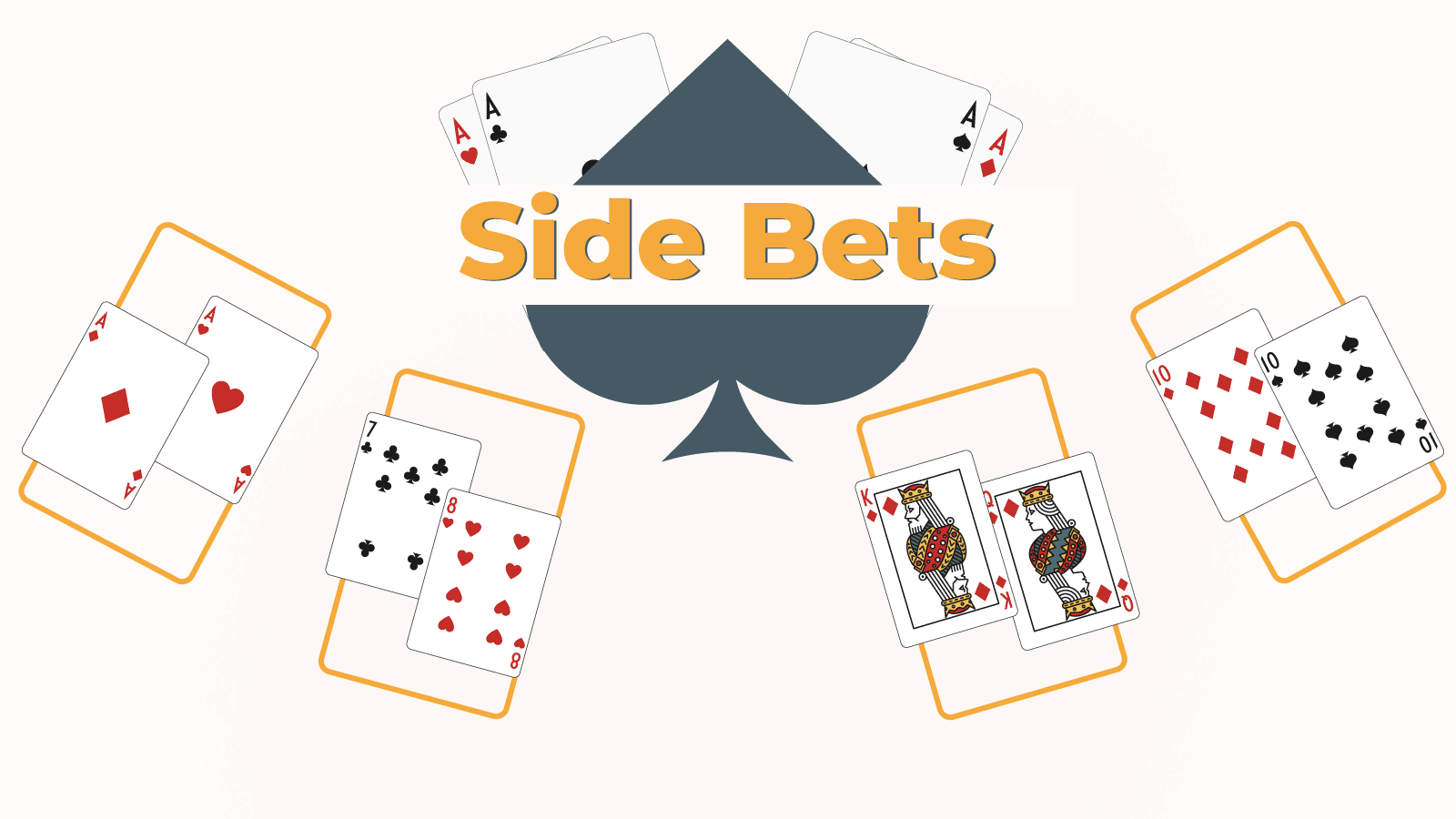
Blackjack is the best game on the casino floor for the player (with certain bets on the craps table running a close second). But 1-1 payouts or even the 3-2 blackjack bonus doesn’t really move the needle for excitement in some cases. Sometimes it’s hard to concentrate on basic strategy when you see those big jackpots advertised on the blackjack layout.
Casinos like blackjack because most players deviate from basic strategy, and unless they get lucky, that’s more money in the casino till. But what if the casino could create a bet that offers a big payout, but a larger house edge and encourages the players to make that bet every hand? That’s how blackjack sidebets were invented.
Blackjack side bets are optional wagers placed alongside your main hand. While standard blackjack with basic strategy boasts one of the lowest house edges in the casino (around 0.5 percent), side bets carry a significantly higher house edge.

Side Shots
Casinos offer side bets because they provide high-payout lottery-style wins, but mathematically, they act as rapid bankroll drains over time, although they may ramp up the excitement when a jackpot hits.
And there are dozens of different sidebets, according to the Wizard of Odds, Michael Shakelford. He counts at least 60 varieties on his excellent website. But what does he say overall about sidebets? Avoid them.

If you’re playing basic strategy blackjack, you’re as even as you can be against the house. In most cases, you are not required to make a sidebet and you can play blackjack in the normal manner. For the few games that require a sidebet, stay away for sure. They raise the house edge to well over 5 percent. You might as well play 6/5 blackjack (another game to avoid).
Let’s examine three of the popular sidebets starting with the oldest.
Surrender
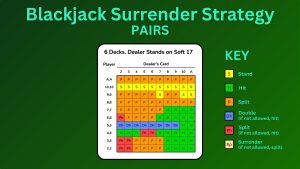
Some people don’t consider Surrender a sidebet since it’s been around forever. It started in the Philippines in 1958 but was quickly introduced to America.
The surrender option was introduced to give players the choice to forfeit half their bet and fold their initial two-card hand before playing it out. For example, players could get half of their bet back if they have a 15 vs. a dealer’s Ten-value upcard. The house edge on surrender is only 0.08 percent to 0.10 percent.

When Atlantic City legalized casino gambling and Resorts International opened in 1978, casino regulators mandated Early Surrender—allowing players to surrender before the dealer checked for blackjack. Early Surrender reduced the house edge by roughly 0.6 percent and gave card-counting teams a massive advantage. After professional team players took heavy profits, Atlantic City casinos successfully lobbied to repeal Early Surrender in 1981, replacing it with the standard Late Surrender (where players can only surrender after the dealer checks and confirms they do not have a blackjack). However, if the player has a blackjack, they can be offered the option of receiving even money should the dealer shows a Ten or an Ace.
But as sidebets go, Late Surrender is the best option.
21+3
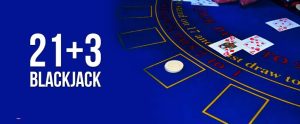
The second-best sidebet takes a huge jump. 21+3 rewards the player’s first two cards if the dealer’s upcard creates a poker hand of flush or higher. For example, if the player gets two hearts and the dealer’s upcard is also a heart, the player gets a bonus. As the poker “hands” get higher—straight, three of a kind, straight flush, or suited three of a kind—the payouts get larger. The catch is the pay table, which varies from casino to casino.
The standard pay table looks like this:
Hand Payout
Flush 5 to 1
Straight 10 to 1
Three of a Kind 30 to 1
Straight Flush 40 to 1
Suited Three of a Kind 100 to 1
But some casinos alter the pay table so a straight only pays 9-1 or a flush 4-1. This dramatically increases the house edge, so expect it to be anywhere from 3.24 percent to 7.1 percent.

Perfect Pairs
This bet pays off if the player’s first two cards make a pair. Perfect Pairs hits frequently enough (around 7.5 percent of hands) to keep variance manageable while keeping a moderate payout cap (25 to 1).
Once again, watch out for the pay tables, which can vary wildly between properties. Ensure the Mixed Pair pays at least 5 to 1 and Colored Pair pay at least 10 to 1 to keep the house edge under 6 percent.

Bust Blackjack
There are several names for this kind of bonus, but they all pay out if the dealer busts and how many cards it takes to bust. It gets higher with every additional card and tops out with an eight-card bust, which pays 200-1. It’s an interesting twist, but terrible odds for the player ranging from 5.5 percent to 8 percent.
Lucky Ladies
This game got its start in the small bar-and-grill casinos in Washington state. You may have had a few beers before you started to play, so this lets them get away with this highway robbery. Lucky Ladies promises high jackpot payouts (up to 1,000 to 1 for a Queen of Hearts pair when the dealer hits blackjack), but carries a brutal 17 percent to 29 percent house edge on standard shoes.

So the best advice for a blackjack player? If you find a table with an acceptable minimum (and maximum), pays 3:2 on blackjack, has standard rules that don’t hurt the player, but features an optional sidebet, just ignore the sidebet and play basic strategy blackjack. You’ll win or lose according to your skill, not the ridiculous house edge you face with every sidebet.
21+. Gambling Problem? Call 1-800-GAMBLER