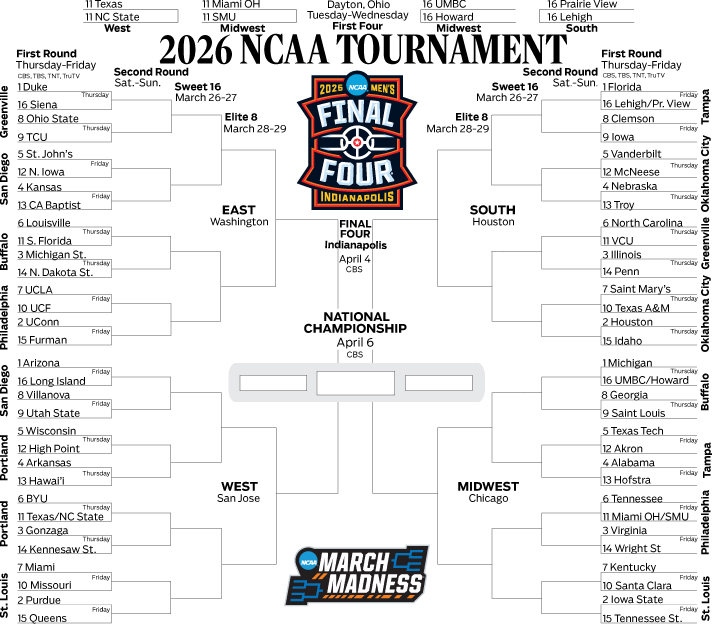
A few years ago, the March Madness Pool at the office was won by a woman who knew nothing about sports. She picked the teams because she liked the names or where they were from. For example, she would pick North Carolina over Texas because she had visited North Carolina and had a great time while she was there. She had never been to Texas, so the Tar Heels were her pick. Somehow, that strategy worked that year.
But to really have a chance to win your office March Madness Pool, there are a few tips to give you a better chance.

Fade the Favorites
Only once in the history of the NCAA Men’s Basketball Tournament has the top four seeds for the four regions—East, South, Midwest, West—made the Final Four. That happened in 2008 and has never reoccurred. So picking the top four seeds might seem safe, but it is highly unlikely.

More likely would be picking a #2 or #3 seed to move on. Usually, at least one top seed makes the Final Four, so choose carefully. By far the most common Final Four includes two #1 seeds, along with a #2, and then either a #3 or #4. Not much help however, when you’re choosing exact teams.
Counting on Conferences
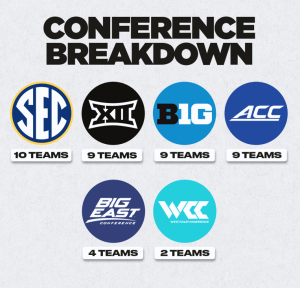
How about conferences? Surely there are dominant conferences. The Atlantic Coast Conference (ACC) has dominated the Final Four, with teams like Duke and North Carolina. The Big 10, with schools like Michigan, Michigan State, and Indiana have had good representation.
And the expanded Southeastern Conference (SEC) now has some powerful basketball schools. The Big East used to be a powerhouse, and still has some strong basketball programs like UConn and St. John’s, but the Pac-12 has lost all its luster with its major members now playing in other conferences.

But because the conferences have been shuffled so drastically over the past five years, you really can’t depend on any one of them maintaining their dominance.
A good strategy is to pick three from the major conferences above and one from a mid-major like the West Coast Conference, the Mountain West, or the Mid-American Conference.

Upsetting Breakers
Every year, there are upsets. Because the seeding is often controversial, powerful teams may get a lower seed when they deserve a higher one. This year, St. John’s, which won the Big East Conference regular season and then dominated the conference tournament, was only given a #5 seed. Most experts had them ranked higher, so the team, led by coaching legend Rick Pitino, will likely play with a lot of emotion and could upset a higher seed along the way.
Historically, certain seeds are more likely to upset their higher seed opponents. Check out our feature with predictions on who makes a good bet for an upset, or even better, who might cover the massive spreads that usually favor the higher seeds.

Picking Winners
In most pools, you want as many teams as possible to survive as long as possible. Try to avoid the bracket busters. But don’t always pick the favorites. If you only choose higher seeds, your bracket will look like everyone else’s. You need some upsets to stand out.
But don’t go crazy with the upsets. The biggest mistake people make is picking too many Cinderella teams. Remember, historically, most Final Four teams are #1–#3 seeds.

Focus on the Final Four. The more of your teams that stay alive, the better. The most points come from later rounds. It’s better to nail your champion than to suffer early upsets. Stick mostly to the top 4 seeds advancing.
Top Tips
If you didn’t watch the conference tournaments, you should have. It gives you a better edge. But you can still find out what happened. Which favorite teams went down in those contests? Fade them in the NCAA tournament because they come in either with a chip on their shoulders or doubts about their ability to run the table.
Pay close attention to injuries. If a key player is lost for the season, it’s likely that the team will not advance, unless by some miracle, someone can fill that role.
Bottom line? “Be boring late, be creative early.”
21+. Gambling Problem? Call 1-800-GAMBLER