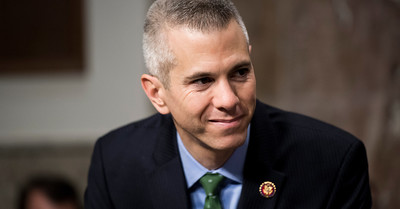
New York state Rep. Anthony Brindisi has introduced a House bill designed to clarify how sports betting relates to the Indian Gaming Regulatory Act (IGRA).
According to the language of the bill, reported in Legal Sports Report, the bill’s goal is to “remove federal barriers regarding the offering of mobile sports wagers on Indian lands when the applicable state and Indian Tribe have reached an agreement, and for other purposes.”
It clarifies that, for the purposes of IGRA, a sports wager made through a retail platform is deemed to be made at the physical location of the server or other computer equipment that takes the wager. In addition, it defines that a bet takes place entirely on a reservation if the bettor and the server
are in the same state; and the applicable state and Indian Tribe have entered into a tribal-state compact under IGRA authorizing sports wagers through interactive wagering platforms.
The bill may not be needed for tribes to offer sportsbooks online, but helps clarify how that might happen.
Brindisi’s district includes the Turning Stone Resort, owned by the Oneida Indian Nation. The Empire State has not yet legalized online sports betting, but brick and mortar commercial and tribal casinos offer retail sportsbooks.
States where the legislation might clarify matters includes Michigan, Oregon, New Mexico and Mississippi.