
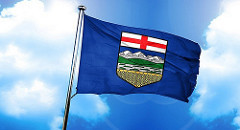
The Canadian province of Alberta is moving towards the legalization of online gaming. That would leave Saskatchewan as the only province that has not done so.
Alberta Gaming, Liquor and Cannabis, the commission that regulates gaming in the province has put out an RFP for online gaming and several providers have responded. The RFP calls for development of a program that would include mobile platforms and computers.
The commission estimates that about $358 million is spent by residents at illegal or unregulated gaming sites. Paul Burns of the Canadian Gaming Association says the situation is somewhat murky: “Offerings coming from licenses through provincial gaming corporations are the clearly legal route in Canada. Where the grey area has come in Canada law is the offshore sites. They are not regulated in Canada. They don’t pay taxes which is a real concern,” he told CBC News.
Chara Goodings, a spokesman for the commission, said that many people don’t know that such sites are unregulated and don’t pay taxes. “It’s not about promoting more. This is about providing a safe place for them to gamble, then we can make sure they’re getting the proper messaging and have the tools there to help support them,” she said.